
 EN
EN 英语
英语 中文简体
中文简体 俄语
俄语 西班牙语
西班牙语
Industry News
May 22,2026
Adhesive Cable Tie Mount Uses in Automotive Wire Harness Systems
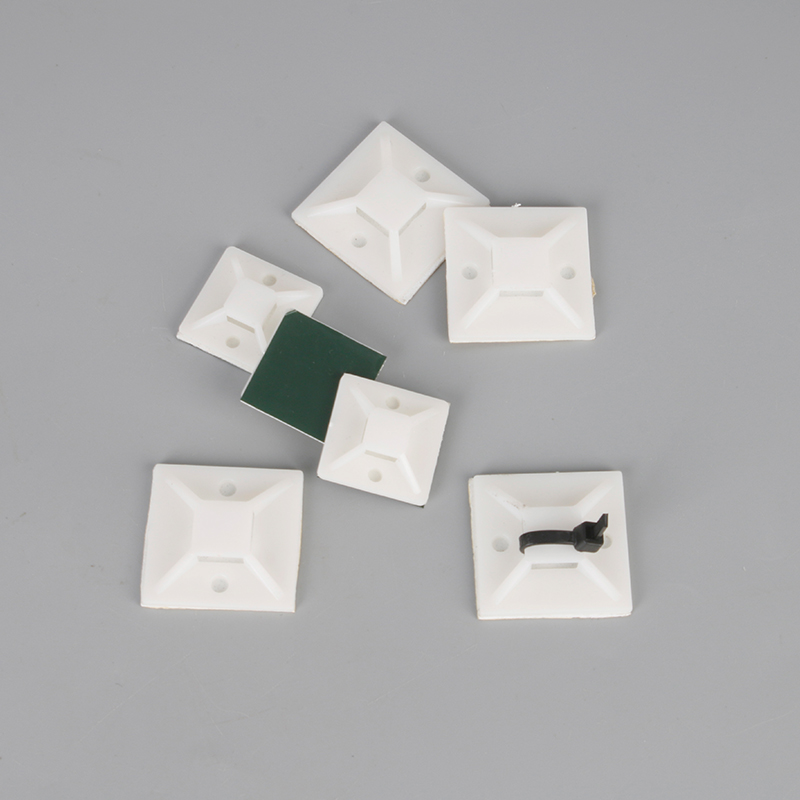
Cable organization plays an important role in both industrial and outdoor electrical systems. As wiring layouts become more complex, selecting suitable mounting components becomes essential for maintaining stable installations. In many applications, the Adhesive Cable Tie Mount is used to support cable routing where drilling or permanent fixtures are not preferred.
Industrial and outdoor environments often require different levels of durability, depending on exposure to temperature changes, moisture, vibration, and sunlight. As a result, multiple mounting options are developed to support different working conditions.
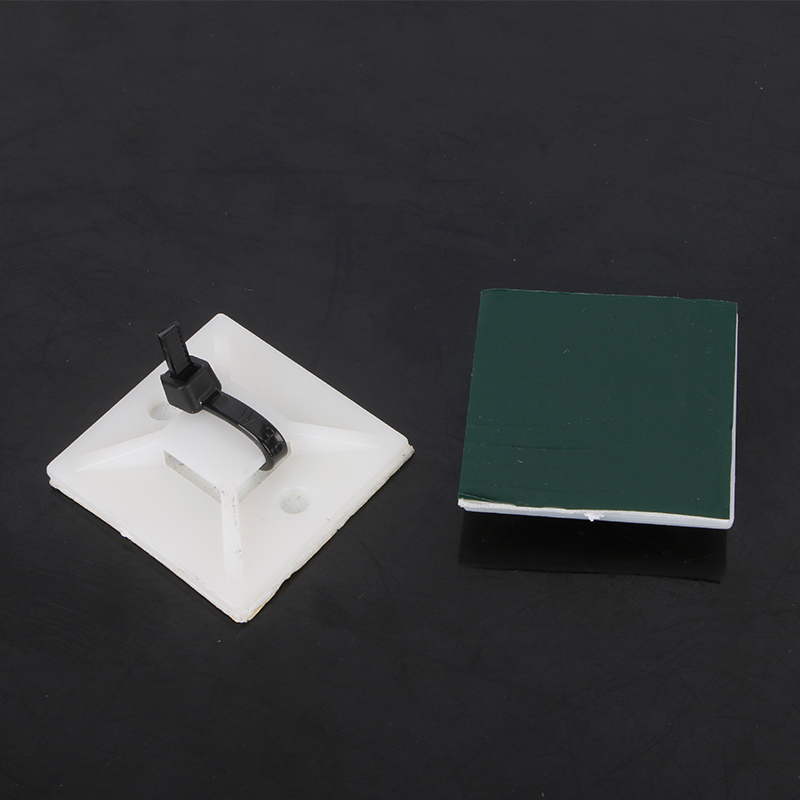
Common Types of Adhesive Cable Tie Mounts
Different mounting designs are used depending on application requirements and installation conditions.
Standard Adhesive Mounts
Standard versions are commonly used in indoor environments such as electrical cabinets, office equipment, and general cable organization tasks. These mounts typically focus on simple installation and basic cable support.
Heavy-Duty Mounting Bases
Heavy-duty designs are used in environments where cable bundles are larger or where vibration levels are higher. These mounts are designed to provide additional structural stability.
UV-Resistant Outdoor Versions
Outdoor cable management often requires resistance to sunlight exposure. UV-resistant materials help reduce degradation when used in exposed environments.
Combination Mounts with Screw Holes
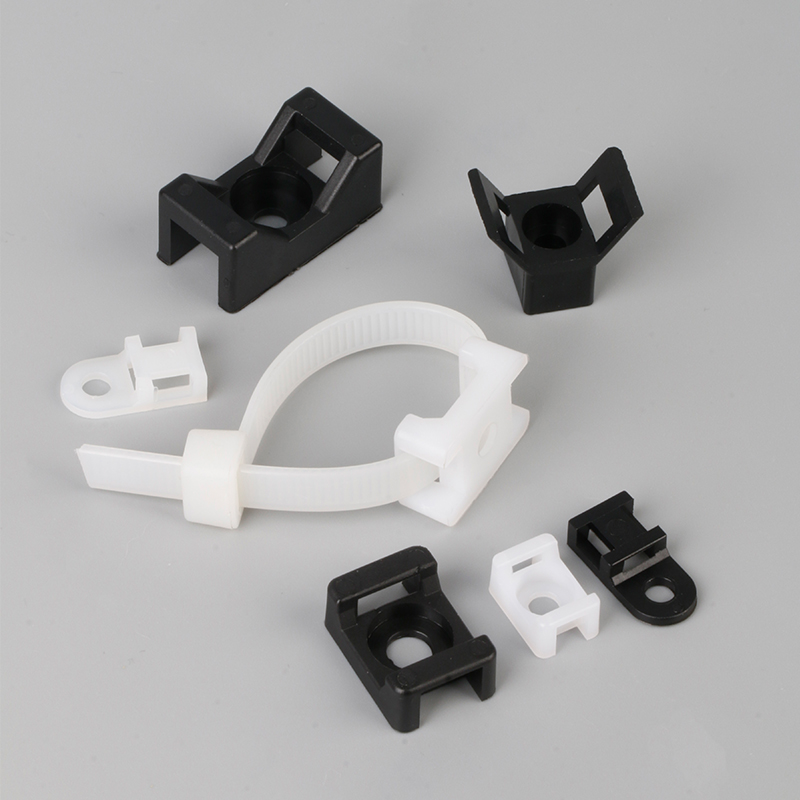
Some designs include both adhesive backing and screw holes. This combination allows users to apply additional mechanical support when needed.
Industrial Wiring Applications
Industrial environments often require structured cable routing for equipment operation, maintenance, and safety.
Electrical Control Systems
Control cabinets and automation panels contain dense wiring systems. Cable tie mounts help organize internal routing and reduce clutter.
Factory Equipment
Manufacturing machinery may include multiple wiring paths for sensors, motors, and controllers. Organized cable placement supports easier maintenance access.
Data and Communication Systems
Server racks and communication devices require structured cable layouts to maintain clarity and reduce interference between lines.
Maintenance Areas
In repair and inspection zones, cable organization helps improve visibility and simplifies troubleshooting processes.
Outdoor Wiring Applications
Outdoor electrical installations require additional considerations due to environmental exposure.
Solar Energy Systems
Solar installations use multiple cable routes connecting panels, inverters, and storage systems. Cable mounts help maintain organized routing across outdoor structures.
Security Systems
Outdoor cameras and monitoring equipment require stable cable installation along walls, poles, or ceilings.
Telecommunications Infrastructure
Outdoor communication systems rely on structured wiring for signal transmission and equipment connectivity.
Lighting Installations
Street lighting and outdoor architectural lighting systems use cable routing solutions to maintain safe and organized wiring paths.
Key Factors in Selecting Cable Tie Mounts
Choosing suitable mounting options depends on several practical considerations.
Adhesive Strength
Different environments require different bonding strengths. Smooth surfaces may support stronger adhesion compared to rough or uneven materials.
Temperature Resistance
Outdoor and industrial environments may involve temperature fluctuations that affect material performance.
UV Exposure
For outdoor applications, resistance to sunlight exposure is an important factor in material selection.
Load Requirements
Cable bundle size and weight influence the type of mounting base required for stable installation.
Installation Practices for Reliable Performance
Proper installation methods help support stable cable organization over time.
Surface Preparation
Cleaning surfaces before installation helps improve adhesive contact and reduces the risk of early detachment.
Correct Placement
Positioning mounts according to cable routing paths helps distribute load more evenly.
Avoiding Excess Load
Overloading a single mounting point may affect long-term stability, especially in vibrating environments.
Inspection and Maintenance
Periodic inspection of outdoor installations can help identify wear caused by environmental exposure.
Role in Industrial and Outdoor Systems
As electrical systems continue to expand in both industrial and outdoor environments, structured cable management remains an important part of system design. Different mounting options allow users to select solutions based on installation conditions and operational requirements.
Adhesive cable tie mounts continue to support organized wiring layouts across a wide range of applications, helping maintain clearer and more manageable cable structures in both co
Related Products


 +86-15558905711
 +86-15057372736
 [email protected]
 105 Liuxiang Road, Liushi Town, Yueqing City, Wenzhou City, Zhejiang Province, China

