
 EN
EN 英语
英语 中文简体
中文简体 俄语
俄语 西班牙语
西班牙语
Industry News
May 26,2026
Adhesive Cable Tie Mount Options for Industrial and Outdoor Wiring
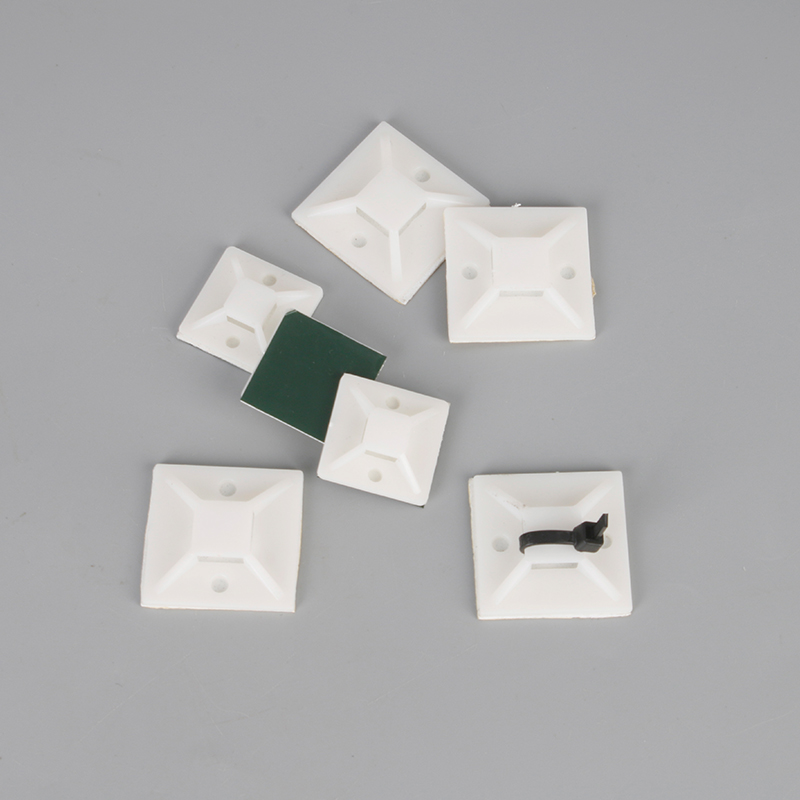
Cable management has become an important part of both industrial and outdoor electrical systems. As wiring structures grow more complex, selecting suitable mounting components plays a key role in maintaining stable and organized installations. In many applications, the Adhesive Cable Tie Mount is used to support cable routing without drilling holes or modifying existing surfaces.
Industrial environments often focus on vibration resistance and compact wiring layouts, while outdoor environments require protection against sunlight, moisture, and temperature variation. These differences influence how cable management products are selected and applied in real installations.
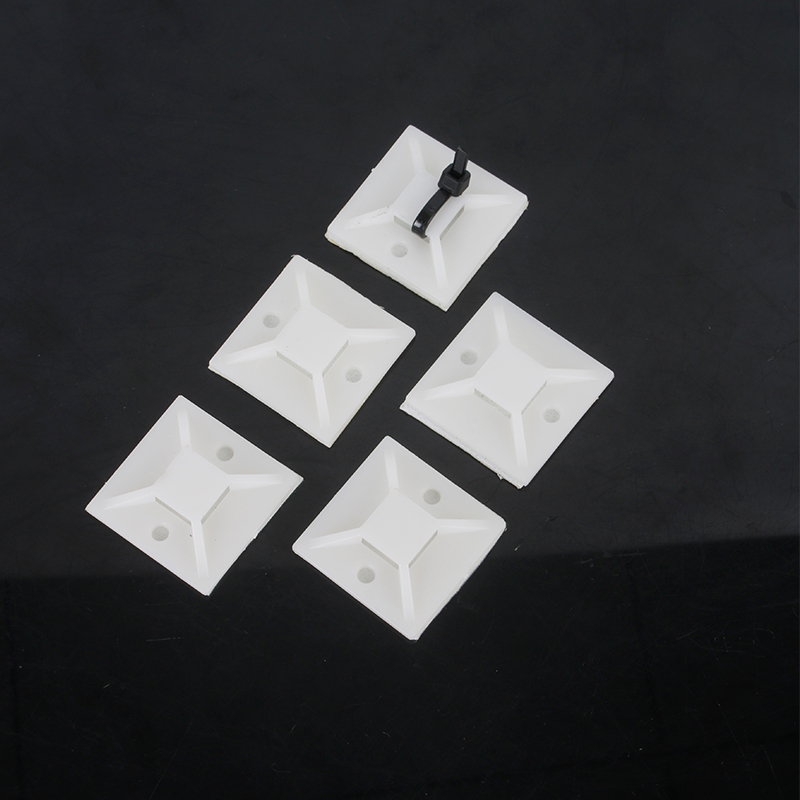
Common Types of Mounting Designs
Different adhesive cable tie mount structures are developed to meet various application needs. Standard versions are commonly used in indoor electrical cabinets, office equipment, and general wiring organization tasks where environmental stress is relatively stable.
Reinforced designs are more suitable for heavier cable bundles or environments with higher vibration levels. These versions usually feature stronger structural bases to help maintain cable positioning over time. For outdoor applications, UV-resistant materials are often used to reduce degradation caused by sunlight exposure.
Some designs also combine adhesive backing with screw holes, allowing users to apply additional mechanical fastening when installation conditions require extra support. This hybrid structure provides more flexibility across different working environments.
Industrial Wiring Applications
In industrial settings, cable routing is closely related to equipment performance, maintenance efficiency, and operational safety. Electrical control cabinets often contain dense wiring systems that require structured organization to simplify inspection and troubleshooting. Proper cable routing helps reduce clutter and improves visibility inside electrical enclosures.
Manufacturing equipment and automation systems also rely on organized wiring to connect sensors, motors, and controllers. When cables are properly secured, movement caused by vibration or machine operation is less likely to affect wiring paths. Communication and data systems, including server racks and network equipment, benefit from structured cable layouts that support easier access during maintenance.
Outdoor Wiring Applications
Outdoor electrical installations introduce additional environmental challenges that affect cable management performance. Solar energy systems, for example, require organized cable routing between panels, inverters, and storage components. Proper mounting helps maintain cable alignment across exposed structures.
Security systems and surveillance equipment installed outdoors also depend on stable wiring paths along walls, poles, or external surfaces. Telecommunications infrastructure requires similar cable organization to maintain consistent signal transmission and equipment connectivity. Outdoor lighting systems benefit from structured cable routing to ensure safe and reliable power distribution across installation areas.
Key Factors in Product Selection
Selecting an appropriate adhesive cable tie mount depends on several practical considerations. Adhesive performance is influenced by surface condition, including cleanliness, texture, and material type. Smooth and clean surfaces generally provide better bonding results compared to rough or contaminated surfaces.
Environmental resistance is another important factor, especially for outdoor or industrial applications. Exposure to temperature changes, humidity, and vibration can affect long-term performance. Load capacity should also match the size and weight of the cable bundle being supported.
Material selection plays a supporting role in overall performance. Nylon-based materials are commonly used because they provide mechanical strength and electrical insulation properties suitable for many wiring environments.
Installation and Long-Term Use Considerations
Proper installation methods help improve the stability and lifespan of cable management systems. Surface cleaning before installation is commonly recommended to remove dust, oil, or moisture that may affect adhesion. Positioning also plays an important role, as correct placement helps distribute cable weight more evenly across mounting points.
Avoiding excessive load on a single mount can help maintain long-term stability, especially in environments with vibration or movement. In outdoor or high-demand installations, periodic inspection may be useful to ensure continued performance and identify any wear caused by environmental exposure.
Adhesive cable tie mounts continue to be widely used across industrial and outdoor applications due to their flexibility and ease of installation. They support structured cable organization in a variety of environments where efficient wiring layout is required.
Related Products


 +86-15558905711
 +86-15057372736
 [email protected]
 105 Liuxiang Road, Liushi Town, Yueqing City, Wenzhou City, Zhejiang Province, China

