
 EN
EN 英语
英语 中文简体
中文简体 俄语
俄语 西班牙语
西班牙语
Home / News / Industry News / Solve Moisture Issues in 10KV Heat Shrink Intermediate Cable Connector
Industry News
May 01,2026
Solve Moisture Issues in 10KV Heat Shrink Intermediate Cable Connector
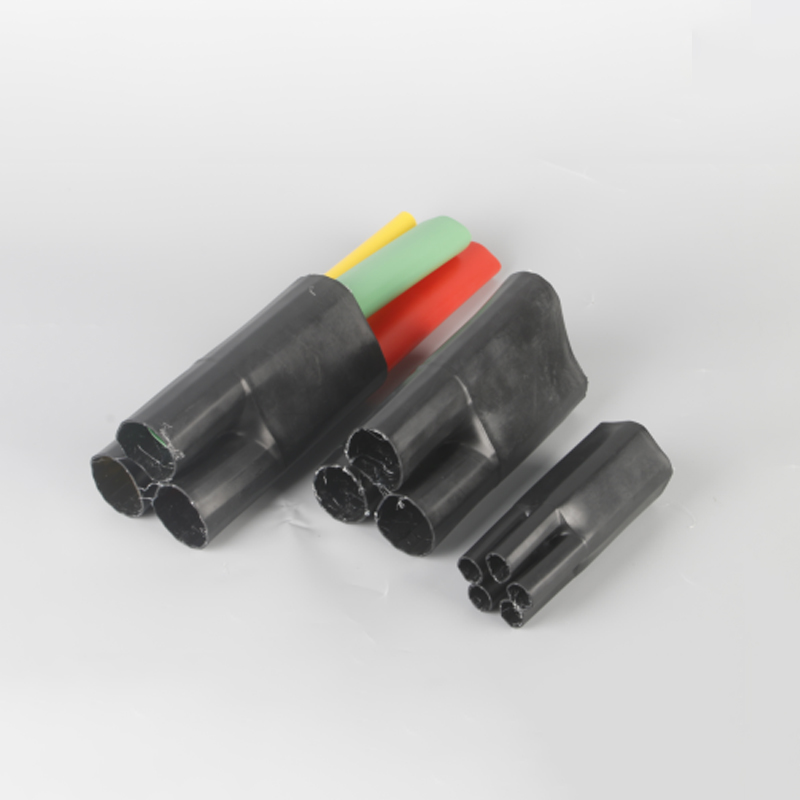
Water penetration into cable joints often leads to gradual insulation degradation and eventual system faults. For the 10KV Heat Shrink Intermediate Cable Connector, moisture-related problems can be managed through careful installation practices and appropriate material choices.
How Water Enters a Cable Joint
Understanding the entry paths helps in selecting effective countermeasures for the 10KV Heat Shrink Intermediate Cable Connector. The most common point is the ends of the outer protective tube, where it meets the cable sheath. If the tube does not seal completely, water from surrounding soil or condensation can migrate along the cable surface into the joint. Another possible path is through small holes or tears caused by overheating, sharp cable edges, or mechanical damage during backfill. Water may also travel inside the conductor strands if the cable end was contaminated before assembly.
Role of Hot-Melt Adhesive in Sealing
Most 10KV Heat Shrink Intermediate Cable Connector kits include a layer of hot-melt adhesive inside the outer tube. When heated, this adhesive flows into microscopic gaps between the tube and the cable sheath. After cooling, it forms a continuous barrier. For the seal to work, the cable surface must be clean and free of oil, dust, or oxidation. Installers wipe the cable sheath with a suitable solvent before positioning the tube. They also apply heat starting from the middle of the tube and moving outward, which pushes melted adhesive toward the ends. If heating begins at an end, the adhesive may flow away from the critical sealing area.
Using Additional Sealing Materials
In situations where the built-in adhesive may not be sufficient, installers add supplementary sealing products. A layer of sealing mastic or butyl tape wrapped around the cable before positioning the outer tube creates a second moisture barrier. Some specifications call for two layers of heat shrink tubing, with the inner layer providing primary insulation and the outer layer focused on sealing. The 10KV Heat Shrink Intermediate Cable Connector can accept this approach as long as the total diameter fits within the available trench or manhole space. For locations with standing water, an additional heat-shrink tube with a heavy adhesive coating is sometimes applied over the completed joint.
Preventing Moisture Entry During Cable Preparation
Moisture can enter the cable ends before joint assembly begins. If the cable insulation or conductor absorbs water, that moisture will remain inside the 10KV Heat Shrink Intermediate Cable Connector after installation. To avoid this, crews keep cable ends capped and elevated when stored on site. If a cut cable has been left open overnight, they remove a short section of the cable end to reach dry insulation before starting the joint. In humid weather, they use a heat gun to warm the cable surface and drive off surface condensation just before applying the first tube.
Testing for Seal Integrity After Installation
Once the 10KV Heat Shrink Intermediate Cable Connector is complete, verification of the seal helps catch problems before the trench is backfilled. A visual inspection checks that the tube ends are flush against the cable with no raised edges or fish-mouth openings. Some crews perform a low-pressure air test by temporarily sealing the joint ends and applying a small amount of compressed air. If the pressure holds for a defined period, the seal is considered intact. Another approach is to measure insulation resistance before and after wetting the joint area, looking for any drop that would indicate leakage.
Design Considerations for Wet Locations
For routes where the 10KV Heat Shrink Intermediate Cable Connector will be placed in persistently wet soil or shallow water, engineers modify the installation design. Placing the joint inside a protective enclosure, such as a concrete pit or plastic splice box, reduces direct water contact. Adding a layer of waterproof tape over the outer tube provides an extra defense. In some cases, the specification may call for a transition to cold shrink technology for only the joints in the wettest sections, while using heat shrink joints for the drier parts of the same line. This hybrid approach keeps material costs manageable while addressing moisture risks where they are highest.
Practical Limits of Moisture Protection
Even with the measures described above, the 10KV Heat Shrink Intermediate Cable Connector has practical limits. Continuous submersion or cycling between wet and dry states eventually stresses any adhesive-based seal. For applications where the joint will be underwater for extended periods, a different technology, such as a cold shrink or resin-filled joint, may be more appropriate. Recognizing these limits allows engineers to apply the heat shrink solution where it works well and choose alternatives where the conditions exceed its design envelope.
Related Products

 +86-15558905711
 +86-15057372736
 [email protected]
 105 Liuxiang Road, Liushi Town, Yueqing City, Wenzhou City, Zhejiang Province, China

