
 EN
 英语
 中文简体
 俄语
 西班牙语
Home / News / Industry News / Preventing Cable Termination Problems Through Proper Copper Lug Design
Industry News
Nov 23,2026
Preventing Cable Termination Problems Through Proper Copper Lug Design
Electrical equipment manufacturers and industrial contractors often face connection problems during cable installation, particularly when working with different conductor sizes and terminal configurations. Loose connections, unsuitable mounting dimensions, and inconsistent crimping results can increase assembly time and create maintenance concerns. For procurement teams sourcing Copper Terminal Copper Lugs, product design and manufacturing consistency deserve attention alongside price and delivery arrangements. As a manufacturer, we focus on helping buyers select suitable terminal structures for their actual electrical connection requirements.
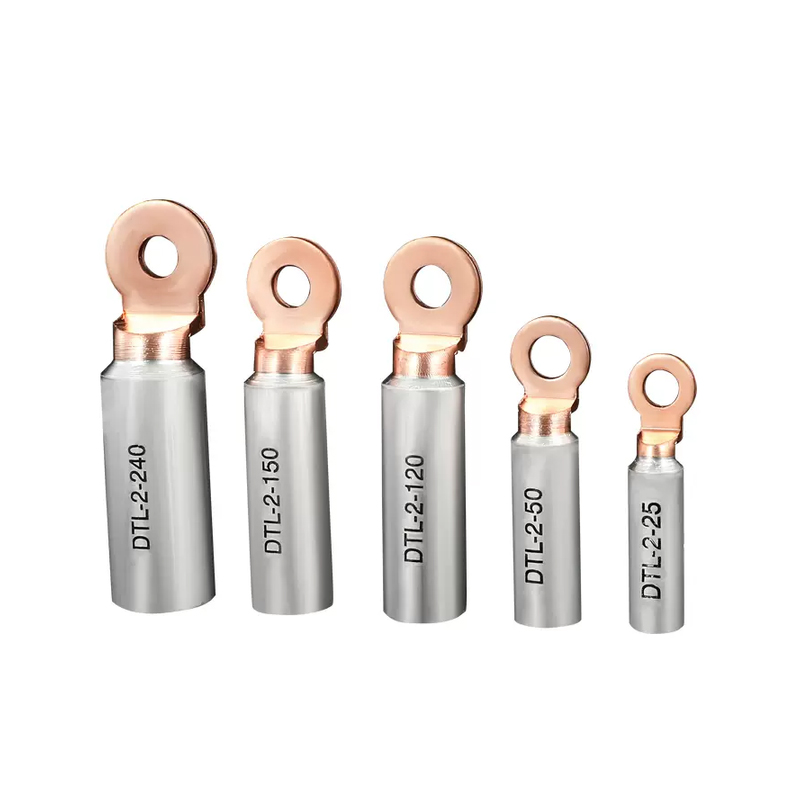
Barrel Design Influences Crimping Results
The barrel is the section that receives the cable conductor. Its internal diameter, length, and wall structure affect conductor insertion and crimping performance.
If the barrel does not match the conductor specification, installation may become difficult or produce an unreliable connection. Buyers should therefore check the recommended cable range rather than relying on external dimensions alone.
For manufacturers supplying different cable assemblies, maintaining consistent barrel dimensions also helps simplify installation procedures.
Palm Structure Affects Mounting Stability
The palm connects the copper lug to electrical equipment through a bolted connection. Its shape and dimensions should correspond with the mounting arrangement.
Different applications may require:
- Single-hole terminals for conventional mounting positions.
- Two-hole terminals where additional positioning stability is needed.
- Narrow palm designs for restricted installation spaces.
- Customized hole arrangements for specific equipment layouts.
Reviewing equipment drawings before purchasing can help prevent fitting problems during assembly.
Copper Purity and Material Consistency Matter
Copper material selection directly influences electrical conductivity and product manufacturing quality. Buyers should pay attention to material specifications, rather than judging quality by color or surface appearance.
As a manufacturer, we consider raw material inspection an important part of production management. Material consistency, forming quality, and dimensional control all contribute to producing copper lugs suitable for their intended applications.
For large-volume procurement, buyers can also request relevant material documentation to support supplier evaluation.
Surface Finish Should Match the Application
Different installation environments place different demands on copper terminal surfaces. Bare copper and tin-plated copper are common options, each serving different application requirements.
Tin plating helps protect the copper surface against oxidation, making it a consideration for equipment exposed to humid conditions. However, buyers should also evaluate plating coverage, coating specifications, and the applicable environmental requirements.
Selecting surface treatment according to actual working conditions helps avoid unnecessary product specification changes.
Production Inspection Reduces Batch Differences
For wholesalers and electrical equipment assemblers, inconsistent products can interrupt assembly operations and increase incoming inspection workloads.
Our production inspection process focuses on several areas:
- Material condition and product dimensions.
- Hole diameter and positioning accuracy.
- Barrel structure and forming quality.
- Surface finish and plating condition, where applicable.
These checks help maintain product consistency and support more predictable bulk procurement.
Installation Requirements Should Be Confirmed Early
A suitable copper lug still requires correct installation. The crimping tool, die size, conductor preparation, and installation procedure should all match the product specifications.
We recommend that buyers confirm these requirements before placing bulk orders, particularly when introducing a new lug model into an existing cable assembly process.
Providing cable samples or technical drawings can also help manufacturers evaluate compatibility before production.
Reliable Supply Starts with Clear Specifications
For electrical distributors, panel manufacturers, and industrial equipment suppliers, selecting terminals requires attention to material, dimensions, surface treatment, and installation compatibility. A clear specification makes communication between buyers and manufacturers more efficient and reduces avoidable procurement errors. By evaluating these factors together, buyers can source Copper Terminal Copper Lugs that match their equipment designs and support consistent electrical assembly across different projects.
Related Products

 +86-15558905711
 +86-15057372736
 [email protected]
 105 Liuxiang Road, Liushi Town, Yueqing City, Wenzhou City, Zhejiang Province, China

