
 EN
 英语
 中文简体
 俄语
 西班牙语
Home / News / Industry News / Copper Lug Selection Supports Safer Connections in Power Distribution Equipment
Industry News
Nov 20,2026
Copper Lug Selection Supports Safer Connections in Power Distribution Equipment
Power distribution equipment requires stable electrical connections to handle continuous current flow and varying operating conditions. In control cabinets, switchgear, industrial machinery, and power distribution panels, poorly matched cable terminals can cause loose connections, installation difficulties, and additional maintenance work. For overseas distributors and electrical equipment manufacturers, Copper Terminal Copper Lugs are important components that deserve careful evaluation during procurement. As a manufacturer, we focus on the practical factors that influence product compatibility, installation efficiency, and consistent quality in bulk supply.
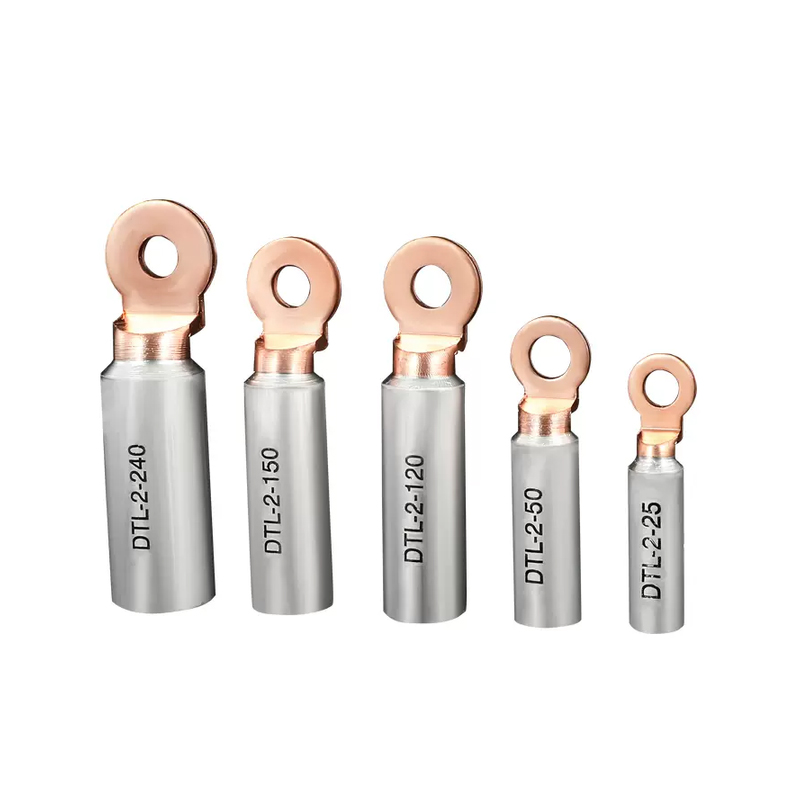
Cable Size Determines Lug Compatibility
One common purchasing mistake is selecting copper lugs based only on their external dimensions. The conductor cross-sectional area must match the lug barrel to achieve a suitable crimped connection.
An oversized barrel may leave insufficient compression, while an undersized barrel can make conductor insertion difficult or damage the cable strands.
Before ordering, buyers should confirm the cable specifications, conductor type, and required lug dimensions. This is particularly important for distributors supplying multiple electrical equipment manufacturers with different connection requirements.
Hole Dimensions Affect Panel Assembly
Copper lugs must fit the mounting points of the equipment. Differences in bolt-hole diameter, palm width, and terminal thickness can create unnecessary adjustments during installation.
For switchgear and distribution cabinets, buyers should pay attention to:
- Bolt-hole diameter and mounting position.
- Palm width and contact area.
- Barrel length and cable insertion depth.
- Clearance around neighboring terminals.
Providing equipment drawings before production helps manufacturers check dimensional compatibility and reduce assembly problems.
Surface Treatment Depends on Working Conditions
Copper naturally develops an oxide layer when exposed to air and moisture. Although this does not automatically make a connection unsuitable, surface condition remains an important consideration in electrical applications.
Tin-plated copper lugs are commonly selected for environments where oxidation resistance is a concern. Bare copper options may also be suitable for applications with appropriate environmental protection.
Buyers should communicate the installation environment and technical requirements when selecting the surface treatment. This helps avoid choosing products based on appearance rather than actual operating conditions.
Manufacturing Consistency Matters in Bulk Orders
For wholesale distributors and electrical component assemblers, inconsistent dimensions between production batches can affect inventory management and assembly operations.
Our manufacturing inspections focus on material condition, barrel dimensions, hole positioning, surface finish, and overall product workmanship. These checks help maintain consistency across supplied copper lug models.
For customized orders, confirming drawings and samples before batch production is also useful. It allows both parties to review product dimensions and connection requirements before moving into regular supply.
Correct Crimping Protects Connection Performance
The quality of a finished connection depends on both the terminal and the installation process. Using an unsuitable crimping die or incorrect tool setting may result in loose compression or barrel deformation.
Installation teams should follow the applicable crimping specifications and use compatible tooling. Hydraulic crimping tools are commonly used for larger cable terminals, while manual or mechanical tools may be suitable for smaller applications, depending on the product design.
Proper conductor preparation and full insertion into the barrel are equally important.
Customized Supply Supports Different Equipment Designs
Electrical equipment manufacturers often require copper lugs with particular hole arrangements, barrel dimensions, or surface treatments. Standard products may not cover every installation requirement.
As a manufacturer, we can evaluate customized requirements according to customer drawings and application details. Clear communication about cable specifications, mounting dimensions, and order quantities helps establish a practical production plan.
Choosing Copper Lugs with Long-Term Application in Mind
A reliable cable termination starts with suitable material, accurate dimensions, consistent manufacturing, and correct installation. For electrical distributors, panel builders, and industrial equipment suppliers, these details influence both procurement decisions and finished equipment quality. Selecting Copper Terminal Copper Lugs according to actual cable and mounting requirements helps reduce compatibility issues and supports dependable electrical connections across different applications.
Related Products

 +86-15558905711
 +86-15057372736
 [email protected]
 105 Liuxiang Road, Liushi Town, Yueqing City, Wenzhou City, Zhejiang Province, China

